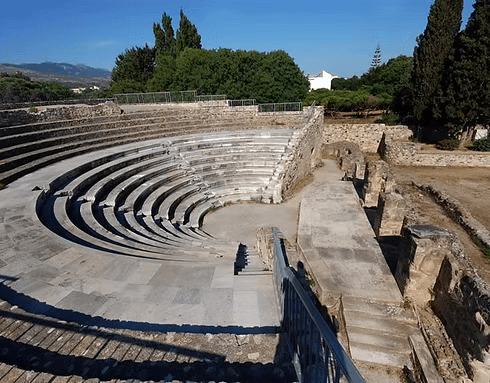
Sights in Kardamena and the entire island of Kos await you to discover during your stay at Chrysoulas Apartments, the ideal starting point to experience the richness and beauty of our region. Furthermore, picturesque villages, clean beaches, historical sites and breathtaking landscapes are all within easy reach.Among the most popular sights in Kardamena are ancient ruins, traditional squares, and beautiful seaside promenades. To help you get started, we have selected three of our favorite attractions to visit first. However, remember that this is just the beginning, as many more wonderful Sights in Kardamena and Kos await you!
Casa Romana
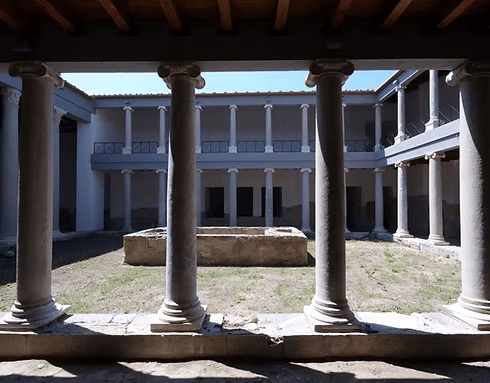
The “Casa Romana,” or Roman Mansion, stands out as one of the most fascinating sights on the island of Kos. In 1933, a devastating earthquake nearly destroyed the entire island. At that time, Kos was under Italian occupation, and the Italians saw the disaster as an opportunity to redesign the city’s layout. Consequently, they conducted extensive excavations, aware that ancient monuments lay beneath the ruined buildings.
Laurenzi, the chief archaeologist, oversaw the excavation, while the Italian administration undertook a complete restoration project that continued until 1940. This Roman Mansion, built in the Pompeian style between the late 2nd and early 3rd centuries AD, was constructed atop the remains of an earlier Hellenistic residence. In addition, the mansion features an excellent drainage system, 36 rooms, and three patios.
From the outside, the building gives little hint of the wonders within. However, as you step through the main entrance, you begin to appreciate the grandeur and historical significance of this remarkable site.
Asclepieion
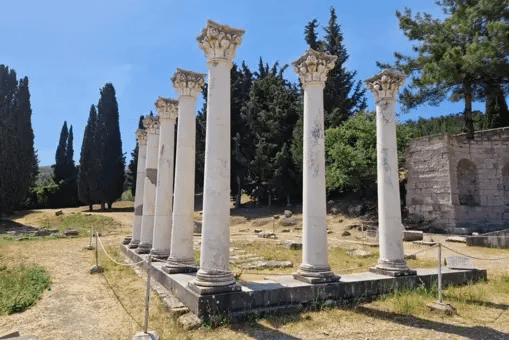
The Asklepieion of Kos is situated on the slopes of a hill, surrounded by lush vegetation and offering stunning views of the sea and the Turkish coast. It is not only the island’s most significant monument, but also one of antiquity’s most important temples of its kind. In ancient times, it served as a place of worship for the god Asclepius, a healing center for the sick, and a renowned school of medicine. Notably, it was here that Hippocrates, the father of medicine, established his legendary school within the sanctuary.
Unlike the more mysterious sanctuary of Asclepius in Epidaurus, the Asklepieion of Kos became known for its emphasis on scientific medicine. The surviving ruins, dating back to the 4th century BC, are located 3.4 kilometers northwest of the city. Its three successive terraces, a hallmark of the Hellenistic period, likely reflect the influence of eastern styles introduced after the conquests of Alexander the Great.
During the reign of the Ptolemies in 260 BC, a crucial event shaped the sanctuary’s development. As a result, the Asklepieion expanded in both size and reputation, attracting patients and students from across the ancient world. Over time, its influence grew, and it became a center not only for healing but also for medical research and teaching.
Today, visitors can explore the impressive ruins, walk among the ancient terraces, and imagine the vibrant life that once filled this sacred place. Thus, the Asklepieion of Kos remains a powerful symbol of the island’s rich history and its enduring legacy in the field of medicine.
Roman Odeon Of Kos